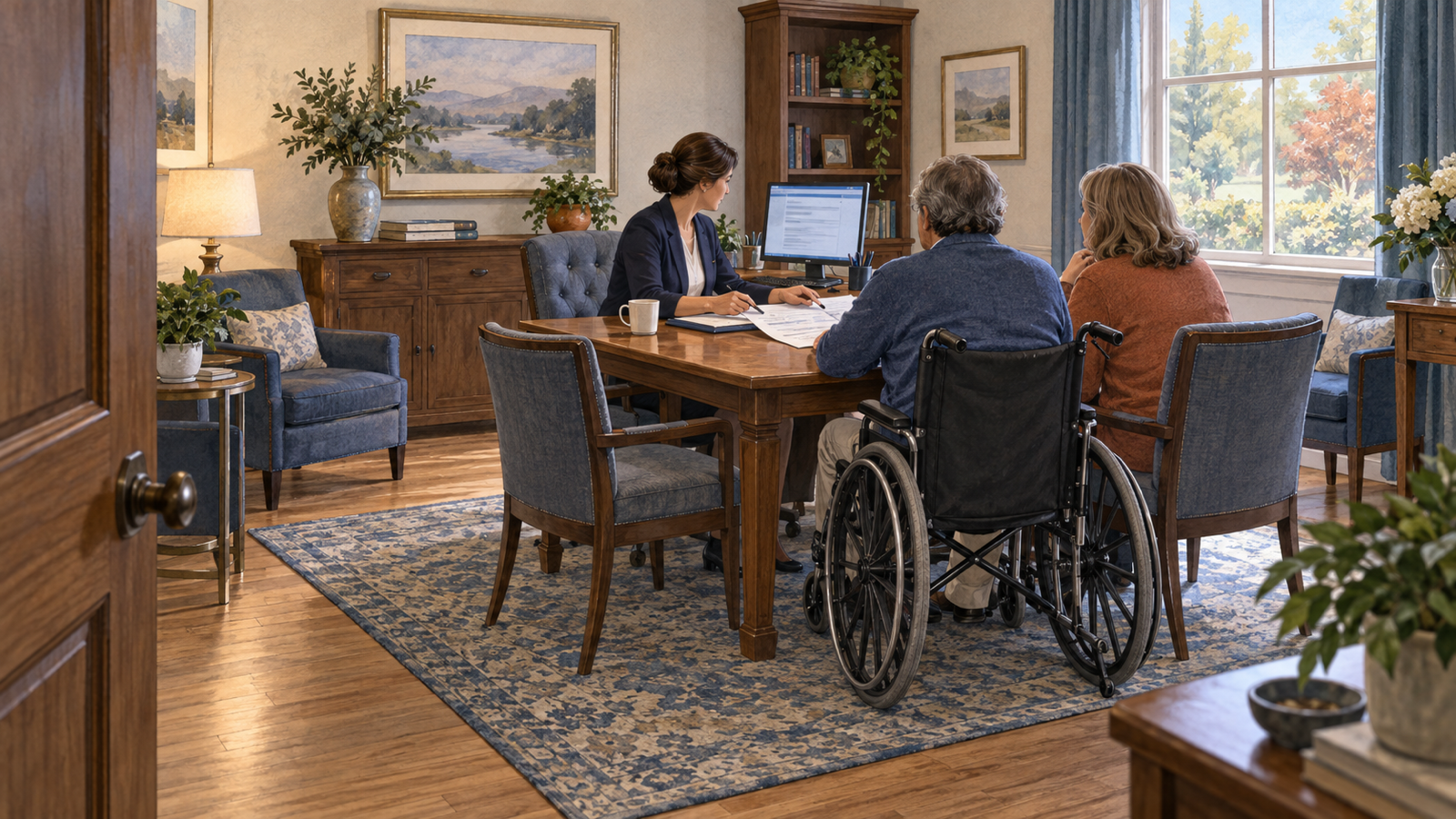
Accessible funeral arrangements begin before the family arrives: ask what will help each person participate, confirm the communication support, prepare usable documents, and check the route into the meeting room. Put a staff member in charge of making the agreed arrangements happen. A welcoming greeting cannot compensate for a conversation someone cannot follow.
This guide addresses U.S. funeral-home arrangement meetings. It combines practical recommendations with the federal communication provisions identified below, checked in September 2026. Building alterations and state or local accessibility requirements need a separate review appropriate to the premises.
Plan accessible funeral arrangements with the person
Ask an open, practical question when arranging the meeting: “Is there anything we should prepare so you can comfortably take part and review the information?” Speak directly with the person who needs support whenever possible. Record the agreed arrangement without requesting an unnecessary medical history or making assumptions from age or appearance.
Confirm how staff will follow up on a request. A person should not need to repeat the same explanation to reception, the arranger, and the manager. Ask whether an accessible electronic document, different seating, a quieter room, or another arrangement would help, while leaving room for an answer your checklist did not anticipate.
Match communication support to the conversation
Choose communication support for the actual discussion, including its length and complexity. The federal rule at 28 CFR 36.303 requires covered public accommodations to provide appropriate auxiliary aids and services where necessary for effective communication. It addresses communication with relevant companions as well as the person obtaining the service.
Do not assume exchanging short written notes will support a complex arrangement conference simply because it worked at reception. Ask how the person communicates and plan accordingly. Possible aids include qualified interpreters, accessible electronic materials, or other effective formats; the appropriate choice depends on the circumstances.
The same regulation prohibits requiring a person to bring an interpreter and limits reliance on accompanying adults or children. Follow the actual exceptions rather than a blanket “a relative can translate” policy. Qualified sign-language interpreting and spoken-language translation are different needs; identify which service is being requested.
Prepare documents and the meeting room
Give the family information in a format they can use throughout the decision, not only when signing. Check the meeting room in advance for access to the table, usable seating, lighting, and competing noise. Ask before moving a person's mobility aid or offering physical assistance, and preserve their choice of where to sit.
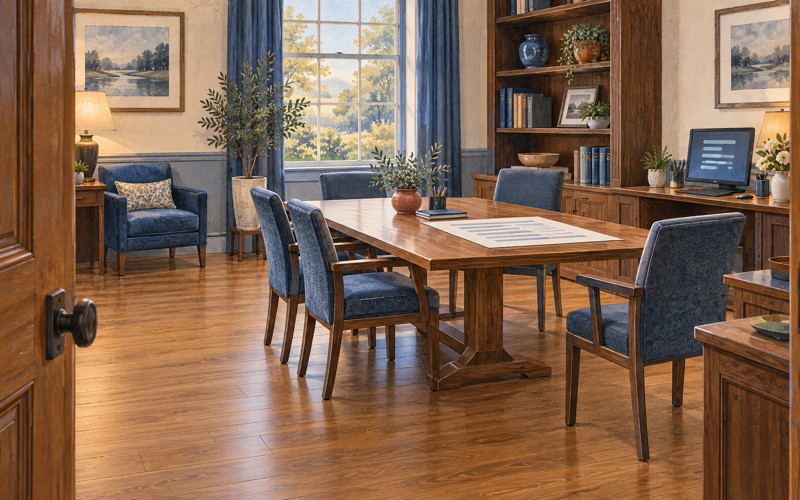
As a practical document check, try enlarging the price list, selecting its text, and following its headings. A scanned image may be difficult to use with assistive technology. Have an appropriate reviewer assess the actual document, and ask the recipient whether the proposed format works.
Keep the route from the entrance clear of temporary furniture, flower stands, deliveries, and loose obstacles. Check the restroom route as well. These operational checks do not establish that a building complies with every accessibility standard; they help staff avoid introducing barriers into an otherwise prepared visit.
Make the support work on the day
Before the appointment, confirm equipment, provider availability, staff responsibilities, and an alternative if the planned support fails. Explain the setup to the family when they arrive. Address questions to the person making the decision, allow time for communication, and check understanding without assuming silence means agreement.
The Department of Justice's effective communication guidance explains advance notice, walk-in requests, and the limited undue-burden and fundamental-alteration exceptions. A difficult request belongs with a responsible manager; lack of a familiar supplier is not a complete response. The guidance also emphasizes staff training.
If a video connection fails, pause the consequential discussion and work out an effective alternative with the person. Do not rush through choices while someone is disconnected from the conversation. Record what support was arranged and any remaining issue so the next appointment starts with useful information.
Verify local resources and review actual barriers
Maintain current contacts for communication services and accessibility assistance in your area. Ask providers about availability, qualifications, setup requirements, and short-notice coverage. For a small firm, a checked contact list and rehearsed process are more practical than buying equipment that nobody has learned to use.
Review a meeting with the team when a barrier occurred: what was requested, what failed, who could authorize a solution, and what needs changing. Invite feedback without asking the family to train the business or disclose more than it wishes. Track a corrective action rather than simply noting that the visit was difficult.
Accessibility belongs in everyday preparation alongside the room booking and paperwork. The useful outcome is that each person can receive information, ask questions, and participate in the arrangements with appropriate privacy and independence.
Step by step
Put it to work this week
Assign each action to a named person and record what remains unresolved.
Add a preparation question
Ask about participation needs when booking and assign an owner to confirm the agreed support.
- Who does it
- Reception lead
- When
- This week
Check one meeting end to end
Review the entrance-to-table route, documents, lighting, noise, and the way staff handle questions.
- Who does it
- Arranger
- When
- This week
Rehearse a failed connection
Confirm who contacts the support provider, who approves an alternative, and when the discussion should pause.
- Who does it
- Manager
- When
- This week
Questions professionals ask
- How should funeral homes ask about accessibility needs?
Ask what would help the person participate comfortably and review the information. Offer a way to discuss communication, document format, seating, and access without requiring an unnecessary medical history. Confirm the agreed arrangements and a named staff contact before the meeting whenever possible.
- Can a funeral home require a family member to interpret?
No. For covered public accommodations, 28 CFR 36.303 prohibits requiring the person to bring someone to interpret. Reliance on an accompanying adult or child is limited by specific exceptions in that regulation. Staff should escalate uncertainty and arrange effective communication rather than defaulting to a relative.
- Does clearing the meeting room establish ADA compliance?
No. Removing temporary obstacles is a useful operating practice, but it does not determine compliance with building standards or every communication requirement. Review the facility and services with appropriate accessibility expertise, consider applicable state and local requirements, and address the specific support needed for the meeting.
Sources and references
These references support the guidance in this article. Each entry names the source and the date we checked it. Open the links for more detail, and confirm current requirements, availability, or costs with the relevant organization before relying on them.
- 28 CFR 36.303 — Auxiliary Aids and Services · checked
A public accommodation shall not require an individual with a disability to bring another individual to interpret for him or her.
- DOJ — Effective Communication · checked
A critical and often overlooked component of ensuring success is comprehensive and ongoing staff training.