A celebration of life is a memorial gathering held on your own timeline — often weeks or months after a death — usually without the body present and without a required script. Because the burial or cremation has typically already happened, you're free to choose any venue, any tone, and any budget that fits the person you're honoring.
How is a celebration of life different from a funeral?
A traditional funeral usually happens within days of a death, follows a familiar structure, includes the body in a casket, and takes place at a funeral home or house of worship. A celebration of life loosens all of that: it centers on the person's story rather than on ritual, and it can look like a church service, a barbecue, a concert, or an afternoon at their favorite fishing spot.
Neither one is more respectful than the other, and you don't have to pick just one. Plenty of families in Missouri, Illinois, and Kansas hold a small private burial or direct cremation right away, then gather everyone for a celebration when there's been time to breathe.
When should you hold a celebration of life?
Whenever it works — that's the honest answer, and it's the point. Waiting a month or a season means out-of-town family can plan travel affordably, the weather can cooperate with an outdoor gathering, and you can plan while thinking clearly instead of in the fog of the first week. Some families choose a meaningful date, like a birthday or anniversary; there's no deadline, and nothing is lost by waiting.
Where can you hold a celebration of life?
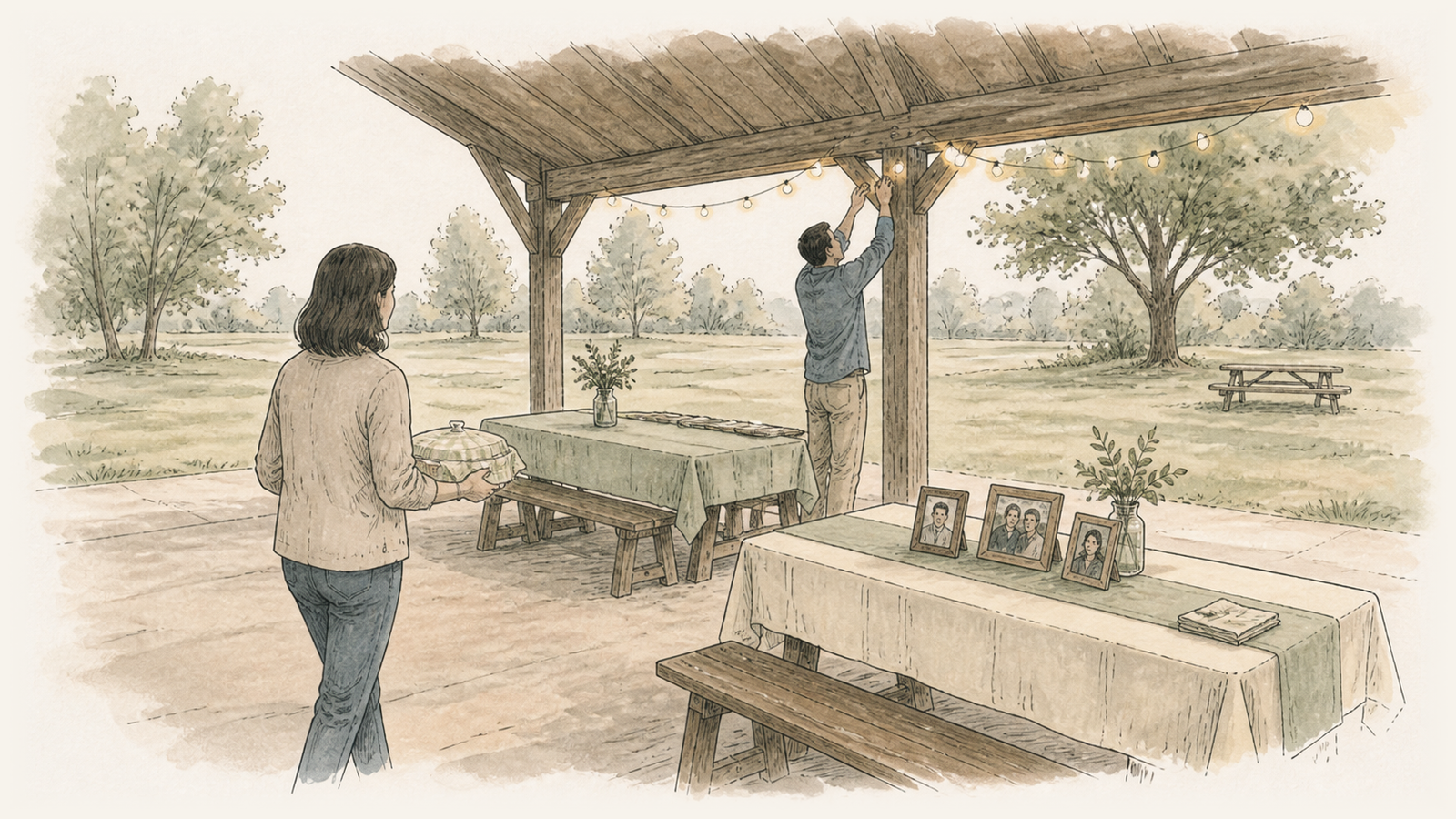
Anywhere people can comfortably gather: a park pavilion, a community hall, a favorite restaurant's back room, a church fellowship hall, a VFW post, a botanical garden, a backyard. State park shelters and city community centers across the region often rent for modest fees, and a restaurant may only ask for a food minimum. Funeral homes host these too, and many do it well — the difference is that now it's one option among many rather than the default.

What does a celebration of life cost?
Usually far less than a traditional funeral, because the two biggest funeral expenses — the casket and the full-service package — aren't part of it. For comparison, the National Funeral Directors Association's 2023 General Price List Study put the median funeral with casket and burial at about $8,300 nationally, while a celebration of life mostly costs whatever the venue, food, and printing come to: a potluck in a borrowed hall can run a few hundred dollars, and a catered restaurant gathering a few thousand.
The disposition still has its own cost, and it's worth knowing your rights there. Under the FTC Funeral Rule, every funeral home must give you itemized prices and let you buy only what you want — including a simple direct cremation with no ceremony attached, which is typically the least expensive option and pairs naturally with a celebration you host yourself later.
How do you give it shape without making it stiff?
The gatherings that work best have a light structure holding them up: someone welcomes everyone and explains what will happen, one or two people share prepared remembrances, the floor opens for anyone moved to speak, and someone closes — with a toast, a song, a moment of quiet. That's the whole skeleton. The welcome matters more than people expect, because a room full of grieving guests wants to know someone is steering; the closing matters because it tells people it's okay to shift into eating, hugging, and telling the unpolished stories.
If nobody in the family feels able to lead, consider hiring a celebrant — a trained officiant who meets with you, gathers the stories, and shapes the gathering around the actual person rather than a template. Clergy, a funeral director, or a steady-voiced friend can fill the same role; fees vary, so ask up front. Then let the person choose the details for you: their recipes or favorite takeout on the tables, their music playing, a photo table, and cards where guests write down a memory the family can keep — those cards often end up being the most treasured thing to come out of the day.
What can you skip?
Almost anything that feels performed rather than meant. Formal dress codes, receiving lines, rented limousines, elaborate printed programs, and a rigid schedule can all go if they don't sound like the person you're honoring. Grief will show up regardless of what you plan — your only real job is to make a room where people can hold it together, laugh at the good stories, and leave feeling they said a true goodbye.
Sources and references
These references support the guidance in this article. Each entry names the source and the date we checked it. Open the links for more detail, and confirm current requirements, availability, or costs with the relevant organization before relying on them.
- NFDA — 2023 General Price List Study (news release, 8 December 2023) · checked
the median cost of a funeral with casket and burial has increased only 5.8% over the past two years (from $7,848 to $8,300) ... The cost does not take into account interment in a cemetery, monument or grave marker costs, or cash-advance charges.
- FTC — The Funeral Rule (consumer guidance) · checked
Funeral directors must give you price information on the telephone if you ask for it. You don't have to give them your name, address, or telephone number first.