On the morning of a funeral, working out who is driving, where everyone should meet, and how a relative will get home can feel like another whole job. A limousine or family car service can take some of that work off your hands. The right choice starts with the people who need a ride and the journey they need to make.
You do not have to choose the most formal vehicle. A sedan, a roomy passenger van, an accessible vehicle, or a limousine may suit your family. What matters is that everyone can travel safely and comfortably, the plan is clear, and someone dependable is responsible for both the outward and return journeys.
Start with the people and the whole journey
Before calling, write down how many people need transportation, the pickup addresses, the service location and time, any cemetery or reception stop, and where each person needs to finish. Include children, walking aids, wheelchairs, and luggage in the conversation. A vehicle that seats your group may not also have room for everything they need to bring.
Ask the funeral home what family transportation is already included or available. Be specific: “Are we discussing a car for the family, transport for the person who died, or both?” Those are different arrangements. Confirm who books the family car, who operates it, who takes payment, and who handles a problem on the day.
The FTC lists limousine use among optional funeral goods and services in its funeral costs and pricing checklist. If the funeral home is arranging the car, ask for its charge to be identified in the estimate so you can see what you are comparing.
Ask to see the vehicle you would actually receive
“Which vehicle are you quoting, and how many passengers can sit comfortably with their belongings?” is more useful than asking whether the company has a limousine. Request current photographs of the actual vehicle, including the doorway and seating, or arrange to see it if practical. Ask whether that vehicle is guaranteed and what substitutions the booking terms allow.
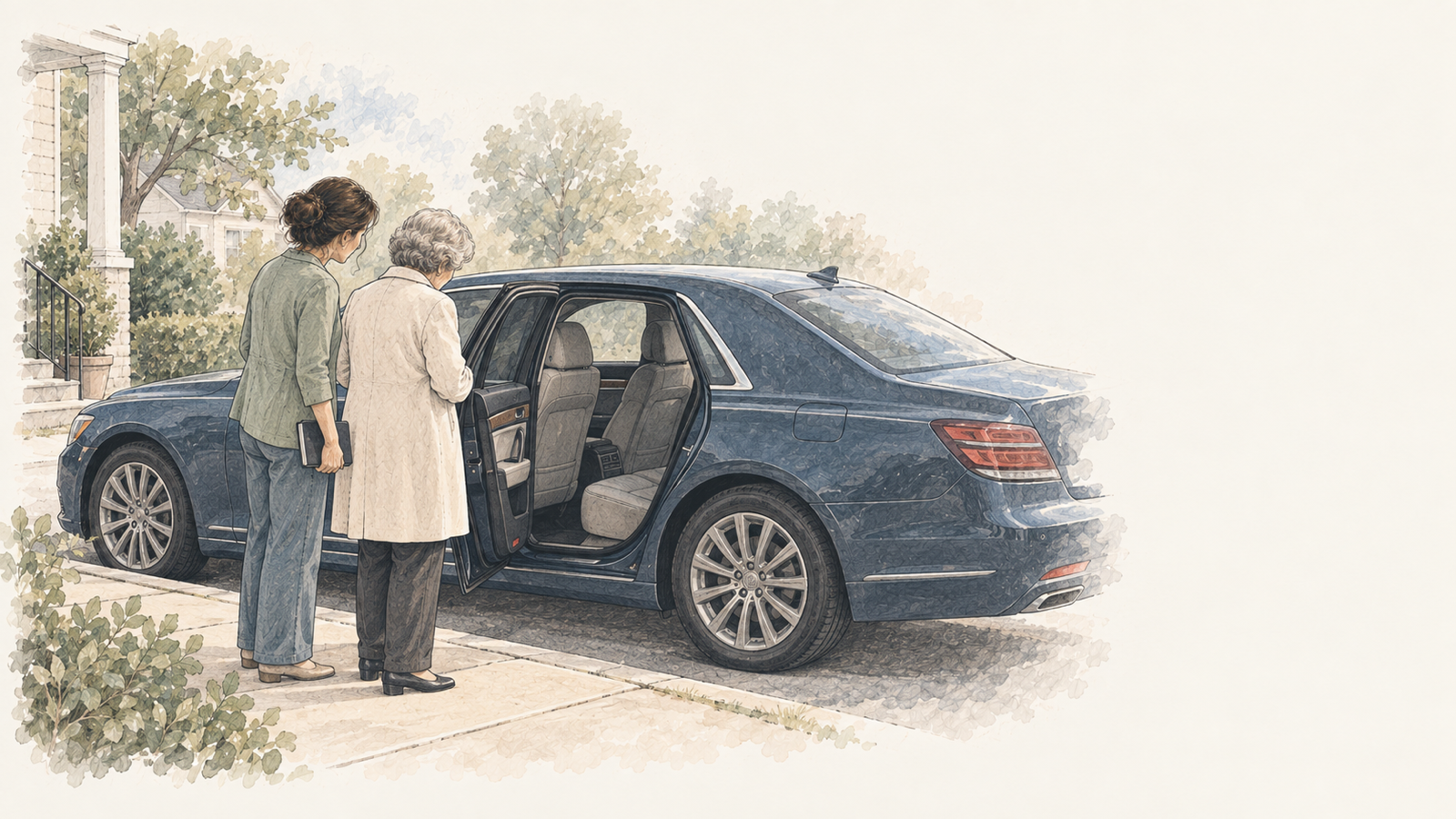
Think about getting in and out as well as the ride. A low seat, narrow opening, or long bench that requires someone to slide sideways may be difficult for a relative with limited mobility. Ask about step height, handholds, space to turn, and what assistance the driver can provide. Let the passenger describe what works for them rather than choosing on their behalf.
If someone needs to remain seated in a wheelchair, say so before requesting a quote. Ask specifically for a vehicle equipped for occupied-wheelchair transport, appropriate securement and passenger restraints, and a driver trained to use the equipment. “We have room for a wheelchair” might mean storage for a folded chair; it does not answer whether that person can ride in it.
Check the operator, insurance, and passenger safety
Ask for the legal name of the company that will operate the trip, not just the booking service’s name. Ask whether it uses its own drivers and vehicles or subcontracts, and request current commercial passenger-transport insurance information and the applicable license or operating-authority details. If another company will do the driving, check that company too.
For carriers subject to federal oversight, FMCSA’s passenger carrier search lets you check registration, insurance links, and safety information using the company name or USDOT number. It is not a complete directory of every local car service. For trips wholly within one state, FMCSA directs consumers to the state oversight agency. Ask which state or local agency licenses the operator and verify the details there when federal records do not apply.
Ask whether every person will have their own usable seat belt and whether the seating suits any child restraints you need. NHTSA recommends choosing a car seat for the child’s age and size that also fits the vehicle, and following both manufacturers’ instructions. Read NHTSA’s car-seat guidance. Agree in advance who supplies and installs the seat; do not leave compatibility to pickup time.
Find out how the company handles funerals
Ask, “Have your drivers handled family transportation for funerals, and how do you coordinate with the funeral director?” Listen for a practical answer about arrival times, where to wait, loading passengers without rushing them, and responding when the service runs late.
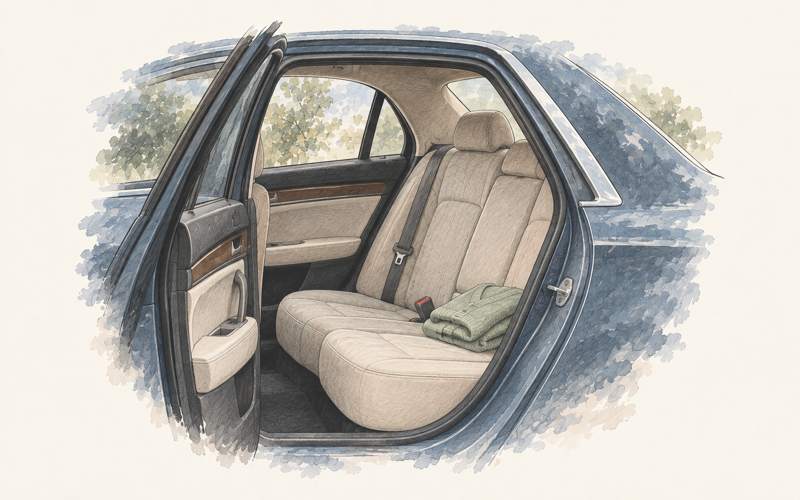
A quiet ride may matter more than a list of amenities. You can ask for no music, a comfortable temperature, discretion, and time for an older passenger to get settled. A company should be able to explain how those requests reach the assigned driver.
If there will be a procession, connect the transportation company with the funeral director so they can agree on the route and instructions. Give the family a meeting address in case vehicles become separated. Nobody should feel they must take a risk to keep up.
Compare the full price for the same itinerary
Send each company the same passenger count, route, stops, and expected schedule. Request a written, itemized quote. Ask when the paid time starts and ends, whether there is a minimum booking, and how waiting time and overtime are charged.
Then ask about mileage, extra stops, parking, tolls, taxes, fuel charges, gratuity or service charges, and any accessibility-related arrangements. Find out which amounts are included and which could change. A low hourly rate alone does not tell you the cost of the whole journey.
If the car is booked through the funeral home, ask whether the transport charge is part of its own service or a third-party charge, and whether any arrangement fee is included. Get the deposit, balance due date, cancellation and rescheduling terms, and refund conditions in writing before paying.
Make the return trip part of the booking
“Will the driver wait, or come back?” is an important question. Confirm the pickup point after the service, the pickup after any cemetery or reception stop, and the final drop-off addresses. Ask what happens if one person needs to leave early or the day takes longer than expected.
Choose one family contact for the driver and give that person the written itinerary and dispatch number. Share only the passenger information needed to carry out the trip. Ask when you will receive the driver’s contact details and who answers if that driver cannot be reached.
Also ask, “What is your backup plan if the vehicle breaks down or the driver is unavailable?” A useful answer explains who arranges a replacement, how your family will be updated, and what the contract provides if the company cannot deliver the service.
Notice how the company answers
Look for specific answers, a consistent written quote, a named operator, and willingness to discuss the needs of the people riding. Recent reviews can help you spot patterns about punctuality, communication, and vehicle condition, but they should sit alongside your checks, not replace them.
Pause if the company will not identify the operator, avoids insurance questions, cannot explain vehicle substitutions, or presses for a deposit before giving you the terms. A listing, attractive photographs, or a friendly first call does not settle those questions.
You can begin simply: “We need transportation for family members attending a funeral. Could you help us work out the right vehicle, the full cost, and the plan for getting everyone home?” If you are still working out the service arrangements, Ruth’s PartingPoint guide to your first funeral-home call can help you prepare.
For now, write down who needs a ride and where they need to finish the day. That is enough to start. You are looking for a company that can turn those details into a plan your family does not have to keep carrying in their heads.
Questions families ask
- Do we need a stretch limousine for a funeral?
A stretch limousine is one option, but your family may be better served by a sedan, passenger van, or accessible vehicle. Choose around passenger needs, comfortable boarding, usable restraints, luggage space, and the route. Ask the funeral home what is already included before booking another vehicle.
- What should a funeral car-service quote include?
Ask for the vehicle, passenger capacity, pickup and return arrangements, included hours and mileage, waiting and overtime charges, extra stops, tolls, parking, taxes, and any gratuity or service charge. The written terms should also explain deposits, cancellation, rescheduling, substitutions, and what happens if the company cannot provide the booked service.
- Can we arrange family transportation separately from the funeral home?
You can ask a car service for a separate quote and discuss the arrangement with your funeral director. Check what your existing funeral agreement includes before paying for another car. Make sure the driver and funeral director have the same addresses, schedule, procession plan if applicable, and contact details.
- What should we ask if a passenger uses a wheelchair?
Explain whether the passenger can transfer to a vehicle seat or needs to remain in the wheelchair. Confirm the actual vehicle, boarding equipment, securement and passenger restraints, driver training, and space for companions. A company offering to carry a folded wheelchair has not necessarily confirmed an accessible ride for its user.
Sources and references
These references support the guidance in this article. Each entry names the source and the date we checked it. Open the links for more detail, and confirm current requirements, availability, or costs with the relevant organization before relying on them.
The linked agencies support the pricing, operator-checking, and child-restraint guidance. The booking questions are practical suggestions. Quotes and contract terms come from the individual company; this guide does not set a local price range or endorse a provider.