To write a eulogy, start with a few things you remember about the person. Choose what you would like to share, put it into words you would use in conversation, and read it aloud. Ask whoever is organizing the service how much time is available before deciding how much to include.
You do not have to tell a whole life story. A short account of the part of their life you knew can be enough.
How long should a eulogy be?
Check with the funeral director, celebrant, clergy member, or family member coordinating the speakers. The time available will depend on the service and whether other people are speaking.
Once you have a draft, read it aloud and time yourself. Leave room to pause. If it runs longer than the agreed time, choose which details matter most to you and shorten the rest. Word count alone will not tell you how long your reading takes.
Where do you begin?
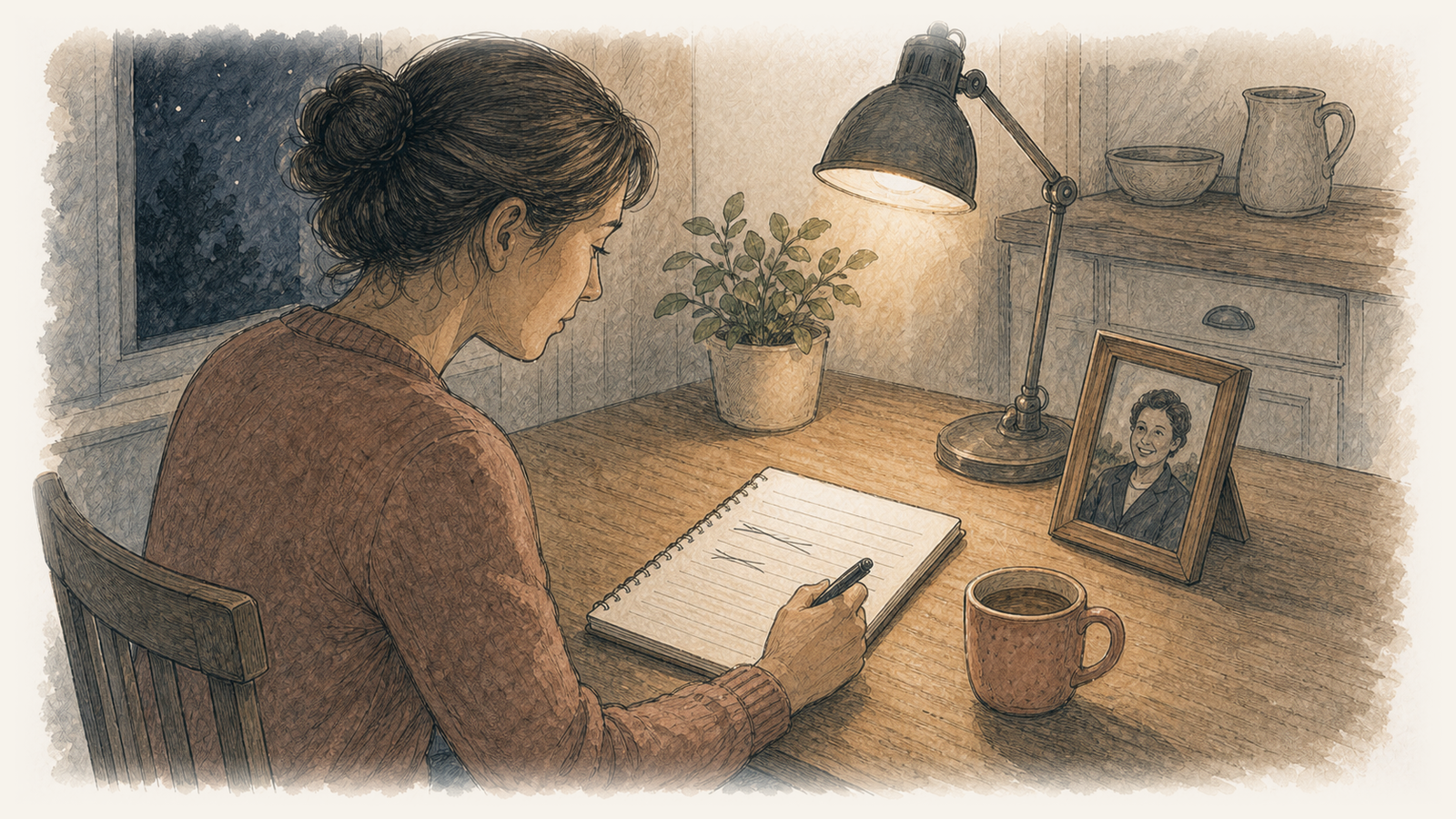
Make a few notes before trying to write an opening sentence. You could use these prompts: What did we do together? What phrase do I associate with them? What is one occasion I would like people to hear about?
For example, a note might say: “Grandad taught me to mend a bicycle tire. He made me find the puncture myself, even though he already knew where it was.” That gives you something to describe without needing to begin with a grand statement about his life.
If you want other perspectives, ask someone for a memory. Check whether they are comfortable having you share it at the service, especially if it includes something personal.
What structure can you use for a eulogy?
One option is to introduce yourself, share a memory, explain what you remember about it, and close with a brief thank-you or farewell. Marie Curie's eulogy guide also offers several ways to organize a tribute; there is no required structure. Read Marie Curie's guide to writing a eulogy.
An opening might be: “I'm Alex, Jo's nephew. I'd like to tell you about the Saturday mornings we spent in her garden.” You can then describe one of those mornings and what you enjoyed about being with her.
A closing could be just as direct: “I'm grateful for those mornings, and for the time she gave me.” Use that kind of ending only if it expresses what you want to say. You can also close with a reading or a few words that have meaning in your family's tradition.
How much personal detail should you include?
Choose details you are comfortable sharing with the people attending. Check names and dates if you include them. If a story depends on an inside joke, add enough context for someone hearing it for the first time.
You can leave out private medical information, an argument, or a memory that belongs to someone else. A eulogy does not need to include every important event to be an honest account of what you remember.
What if the relationship was difficult?
You do not have to describe a closeness you did not feel. You might keep the tribute to a shared activity, something the person taught you, or a part of their life you can describe accurately and respectfully.
You also do not have to discuss the difficult parts in public. If speaking feels wrong for you, tell the organizer. You could offer a short written contribution, ask someone else to read it, or decline to give the eulogy.
How can you prepare to read it?
Read the draft aloud and change any sentences that are awkward to say. Print a copy with enough space and large enough type for you to find your place easily. If you prefer a device, check that the text stays visible while you read.
You can arrange a backup reader in advance. Give them a copy and agree on a signal if you would like them to take over. During the service, you can pause, take a sip of water, or ask that person to continue.
What can you do next?
Write down one memory as you would tell it to a friend. Then ask the organizer about the speaking time. Those two things will give you a starting point for the draft.
Questions families ask
- Do I have to give a eulogy?
You can decline an invitation to give a eulogy. Let the person organizing the service know so they can make other arrangements. If you want to contribute without speaking, you could offer a memory for another reader to include.
- Can more than one person give a eulogy?
Ask the person coordinating the service whether there is room for several speakers. If there is, agree on the time each person has. You can also compare topics beforehand so each speaker knows what the others plan to share.
- What if I cannot finish reading my eulogy?
You can stop and take a moment, or ask someone else to finish. Before the service, give a copy to a person willing to help and agree on a signal. You can also ask them to read the entire tribute for you.
Sources and references
These references support the guidance in this article. Each entry names the source and the date we checked it. Open the links for more detail, and confirm current requirements, availability, or costs with the relevant organization before relying on them.
- Marie Curie — How to write a eulogy · checked
There are no hard and fast rules