Palliative care is comfort-focused care you can get at any stage of a serious illness, including while you're still pursuing treatment meant to cure it. Hospice is a specific kind of palliative care for people whose doctors expect them to live six months or less, and choosing it means setting aside treatment aimed at curing the terminal illness. The two get confused constantly, partly because hospice is a type of palliative care and partly because both are about comfort. The practical differences, who qualifies, who pays, and what you give up, are worth understanding before someone asks you to decide.
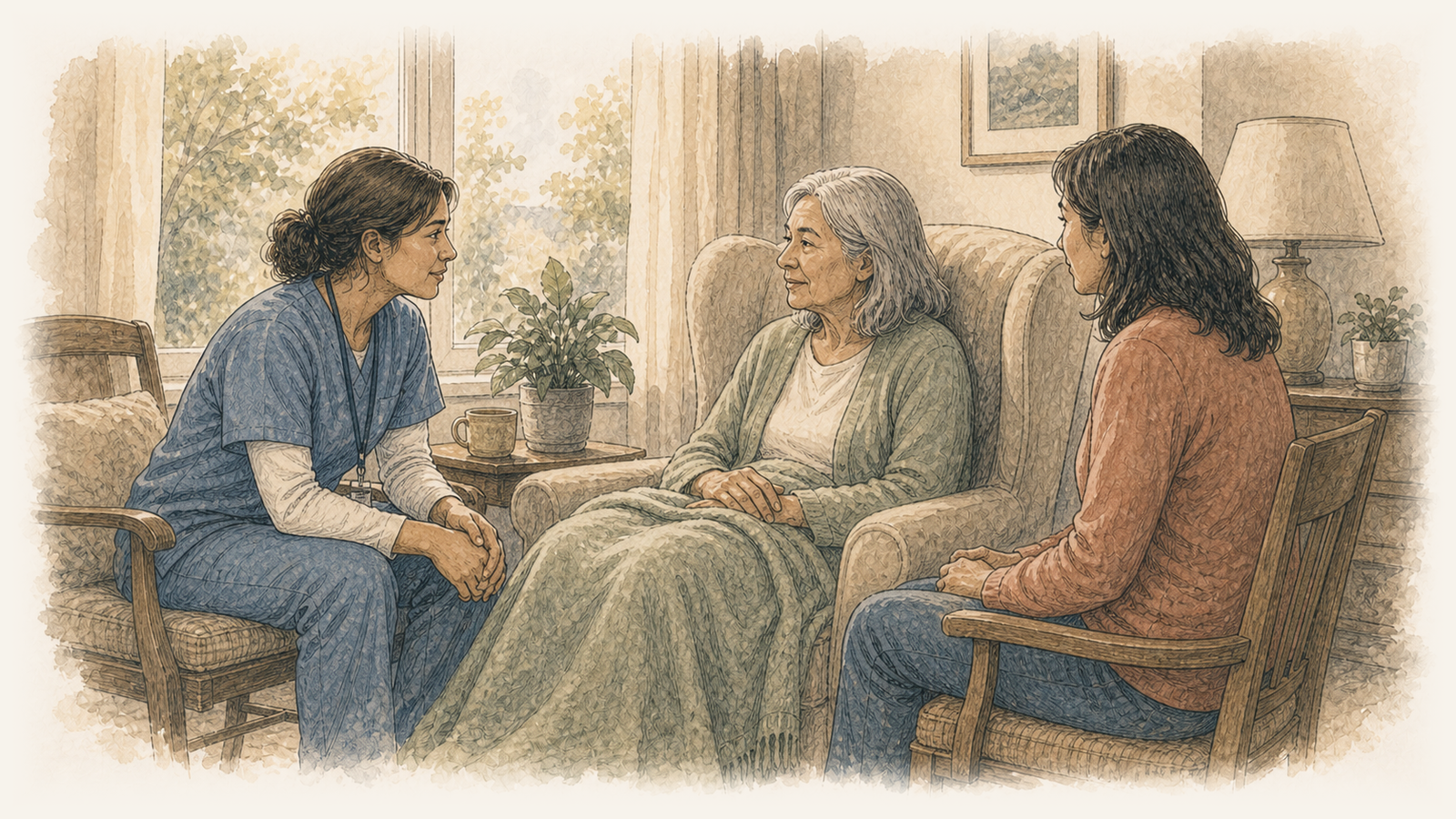
What's the difference between hospice and palliative care?
Palliative care is specialized care aimed at relieving symptoms and stress: pain, nausea, breathlessness, anxiety, the sheer exhaustion of appointments. It can start the day you're diagnosed and run alongside chemotherapy, dialysis, surgery, or anything else your team is doing to treat the disease. There's no prognosis requirement and no expectation that you're near the end of life. People with heart failure, COPD, kidney disease, cancer, and Parkinson's often get palliative care for years.
Hospice takes over when the goal shifts from cure to comfort. Under Medicare's rules, a hospice doctor and your regular doctor, if you have one, certify that you're terminally ill with a life expectancy of six months or less if the illness runs its usual course. You then sign an election statement choosing hospice care instead of Medicare-covered treatment intended to cure that illness. Everything else about hospice, the nurse visits, the medications, the chaplain, the social worker, follows from that one decision.
Who qualifies for hospice care?
Qualifying for hospice is about prognosis, not diagnosis. Any condition can qualify if doctors can certify a life expectancy of six months or less: advanced cancer, end-stage heart or lung disease, kidney failure without dialysis, advanced dementia, ALS. The six months is a medical estimate, not a deadline, and Medicare's own rules assume it will sometimes be wrong.
If someone lives longer than six months, hospice doesn't simply end. Medicare covers hospice in two 90-day benefit periods followed by an unlimited number of 60-day periods, and care continues as long as a hospice doctor recertifies, after a face-to-face visit, that the person is still terminally ill. Plenty of people stay on hospice for a year or more. Far more often, families say afterward that they wish they'd called weeks or months sooner.
Who pays for hospice vs palliative care?
Palliative care is billed like any other specialty care. Under Original Medicare, palliative doctor visits and consultations generally fall under Part B, which means the usual deductible and coinsurance; medications run through Part D, and a hospital-based palliative consult during an inpatient stay falls under Part A. Medicare Advantage and commercial insurance usually cover palliative care too, but the details vary by plan. Ask what your plan pays before the first visit, and ask whether the program you're being referred to is clinic-based or comes to the house.

The Medicare hospice benefit works differently. It's a bundled benefit under Part A that covers what you need for the terminal illness: the hospice team's visits, drugs for pain and symptom management, medical equipment like a hospital bed or oxygen, supplies, short-term inpatient and respite care, and bereavement support for the family after the death. Medicare says you may owe up to a $5 copayment for each prescription for symptom-management drugs and 5 percent of the Medicare-approved amount for inpatient respite care. What the benefit does not cover is room and board, so if the person lives in a nursing home or assisted living, that bill keeps coming.
Where is each kind of care delivered?
Palliative care usually happens in clinics and hospitals, though home-based palliative programs are growing. Hospice mostly comes to you: the large majority of hospice care is delivered where the person already lives, in a private home, a nursing home, or an assisted living apartment. Freestanding hospice houses and inpatient units exist for short stays when symptoms can't be controlled at home. Across Missouri, Illinois, and Kansas you'll find both hospital-affiliated and independent hospice agencies, and the one attached to your hospital isn't automatically the right fit for your family.
Can you leave hospice and go back to treatment?
Yes. Electing hospice is not permanent. You can revoke it at any time, for any reason, and go back to standard Medicare coverage, including treatment meant to cure the illness. People do this when a new therapy opens up, when they want one more round of chemo, or simply because they changed their mind. You can elect hospice again later if you still qualify, and you can switch hospice agencies once during each benefit period if the fit is wrong. Nobody has to justify any of it to anyone.
How do you ask a doctor for palliative care or hospice?
Ask plainly, and ask earlier than feels natural, because most doctors won't raise it first. For palliative care, something like I'd like a referral to palliative care to help with symptoms while we keep treating this is usually enough, and it doesn't signal that you're giving up. For hospice, try the question clinicians use on themselves: would you be surprised if I were still here in a year? If the answer is no, follow it with then I'd like to talk about hospice. You can also call a hospice agency yourself and ask for an informational visit, which costs nothing, commits you to nothing, and the agency will work with your doctor on the certification.
Sources and references
These references support the guidance in this article. Each entry names the source and the date we checked it. Open the links for more detail, and confirm current requirements, availability, or costs with the relevant organization before relying on them.
- Medicare — hospice care coverage · checked
You pay a copayment of up to $5 for each prescription for outpatient drugs for pain and symptom management. ... Medicare doesn't cover room and board if you get hospice care in your home or if you live in a nursing home or a hospice inpatient facility.