Water cremation is the common name for alkaline hydrolysis, a process that uses water, an alkali solution, heat, and sometimes pressure to reduce a body to bone fragments and a sterile liquid, with no flame involved. It is legal in Missouri, Illinois, and Kansas, but legal and available are two different things, and across much of this region you'll have to hunt for a provider rather than assume your neighborhood funeral home offers it. You may also hear it called aquamation, flameless cremation, or green cremation; they all mean the same process.
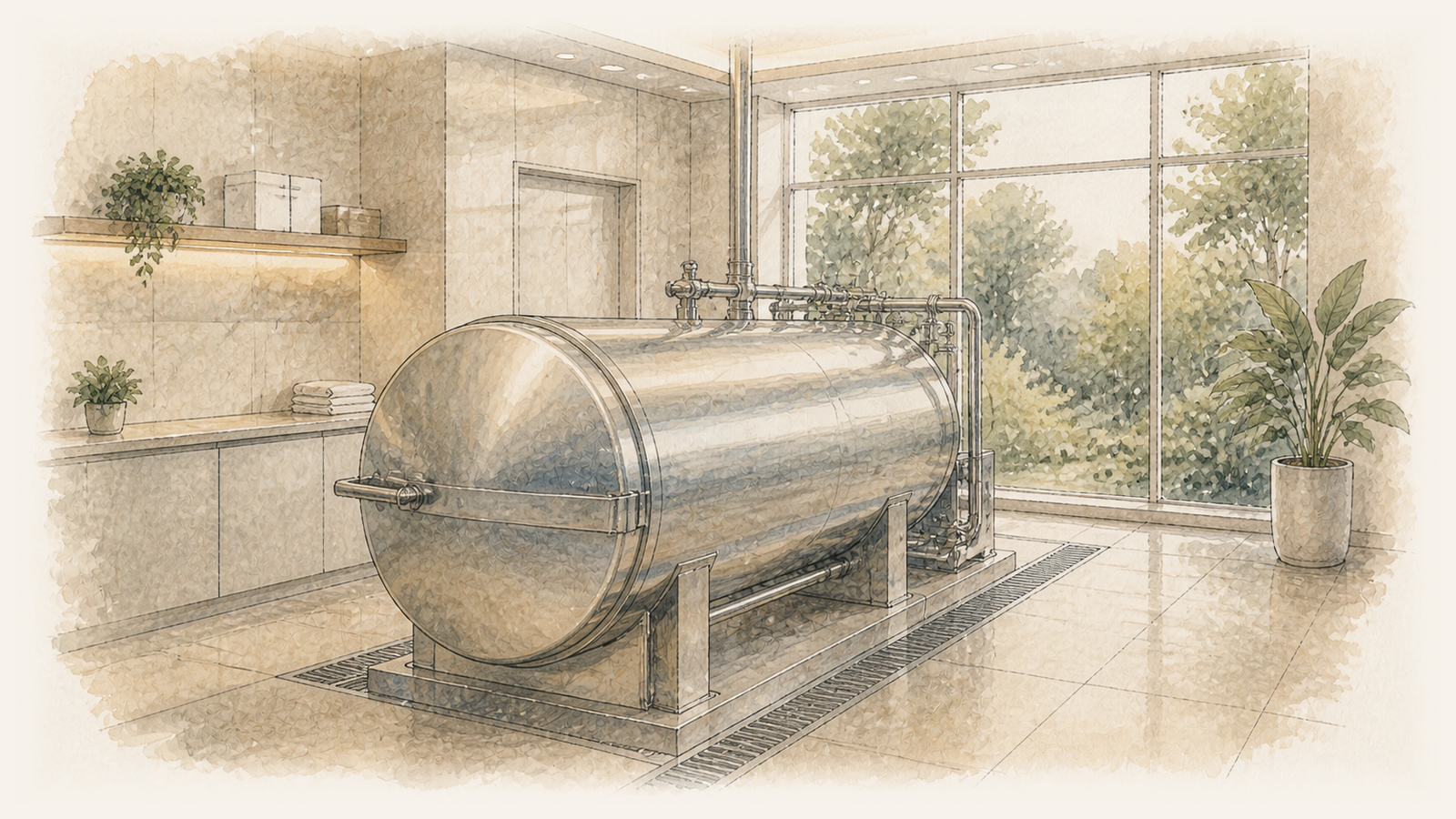
How does water cremation differ from flame cremation?
The body is placed in a sealed stainless steel vessel with roughly 100 gallons of water mixed with alkaline chemicals. The vessel runs between about 199 and 302 degrees Fahrenheit, far below the 1,400 to 1,600 degrees a flame cremation chamber reaches, and the cycle takes anywhere from three to sixteen hours depending on the equipment and the body mass. Some machines use pressure and agitation to shorten that; low-heat systems take the longest.
What you get back is the same category of thing: processed bone fragments in an urn. There are two practical differences. Alkaline hydrolysis yields roughly a third more cremated remains than flame cremation, and they come out pure white rather than gray and need drying before processing, so you may need a larger urn than a flame cremation would call for. The other output is a sterile liquid effluent, released into the municipal wastewater system, and that's the part most families want explained before they decide.
Is water cremation legal in Missouri, Illinois, and Kansas?
Yes, in all three, and roughly half the states now permit it. Illinois was one of the earliest, legalizing it in 2012 by amending state law so the statutory definition of cremation includes alkaline hydrolysis. Missouri followed in 2020, with its definition now covering the process that reduces remains to bone fragments through heat, evaporation, or an alkaline hydrolysis chemical process. Kansas likewise recognizes water cremation under a broadened statutory definition of cremation.
Being legal doesn't make it easy to get. An alkaline hydrolysis unit costs a great deal to install, requires a wastewater discharge arrangement with the local utility, and only a small number of facilities operate in each of these states. In practice that often means your funeral home transports the body to a facility in another city or another state, which adds mileage charges and days to the timeline. Ask the question directly: do you operate your own unit, or do you send out, and where does it go?
What does water cremation cost compared with flame cremation?
Where alkaline hydrolysis is offered locally, providers generally price it close to direct flame cremation. Direct flame cremation commonly runs somewhere in the range of about $1,000 to $3,000 depending on the market, and published aquamation prices tend to sit from roughly $1,300 up toward $4,000. The swing factor is transport: if the nearest vessel is three hours away, the mileage and coordination charges are what change the number. The FTC Funeral Rule entitles you to a General Price List you can keep, so get the figure in writing rather than over the phone.
Is water cremation actually better for the environment?
The core claims are straightforward. There is no combustion, so no direct carbon dioxide, particulate, or vaporized mercury emissions from dental amalgam. The vessel also operates at a fraction of the temperature of a cremation retort, so energy use per case is substantially lower.
Be aware of what isn't settled. Most comparative figures in circulation come from equipment makers and advocacy groups rather than independent peer-reviewed lifecycle studies, so treat precise percentage claims with caution. The process also uses about 100 gallons of water per case and discharges effluent into the sewer system, which some municipalities have debated. If the smallest possible footprint is your priority, price out green or natural burial alongside it before deciding.
What can you do with the remains afterward?
Everything you could do with flame cremation remains: keep them in an urn, bury them in a plot or place them in a columbarium niche, scatter them, or divide them among family. Missouri and Kansas place no state restrictions on where you keep or scatter cremated remains. Federal rules still apply at sea, where scattering must happen at least three nautical miles from land with the EPA notified within 30 days, and you need permission on federal land. Individual cemeteries and parks set their own rules regardless of state law.
How to find out whether it's available near you
Call and ask whether the funeral home runs its own alkaline hydrolysis vessel or sends remains out, where they go, and what the round trip adds in both days and dollars. Ask for those transport charges as separate line items on the itemized statement. If you're planning ahead rather than arranging now, get the answer in writing and revisit it, since availability keeps shifting as new facilities open.
Sources and references
These references support the guidance in this article. Each entry names the source and the date we checked it. Open the links for more detail, and confirm current requirements, availability, or costs with the relevant organization before relying on them.
- FTC — The Funeral Rule (consumer guidance) · checked
Funeral directors must give you price information on the telephone if you ask for it. You don't have to give them your name, address, or telephone number first.