During a cremation, the body is placed in a rigid, combustible container and moved into a chamber heated to roughly 1,400 to 1,600 degrees Fahrenheit, where heat and evaporation reduce everything except bone. What comes back to you isn't ash in the fireplace sense, it's bone fragments, processed to a uniform consistency, usually four to six pounds for an adult. The Cremation Association of North America publishes the operating standards most crematories in Missouri, Illinois, and Kansas follow, and the steps below are the ones that happen in nearly every one of them.
Who authorizes a cremation, and what paperwork comes first?
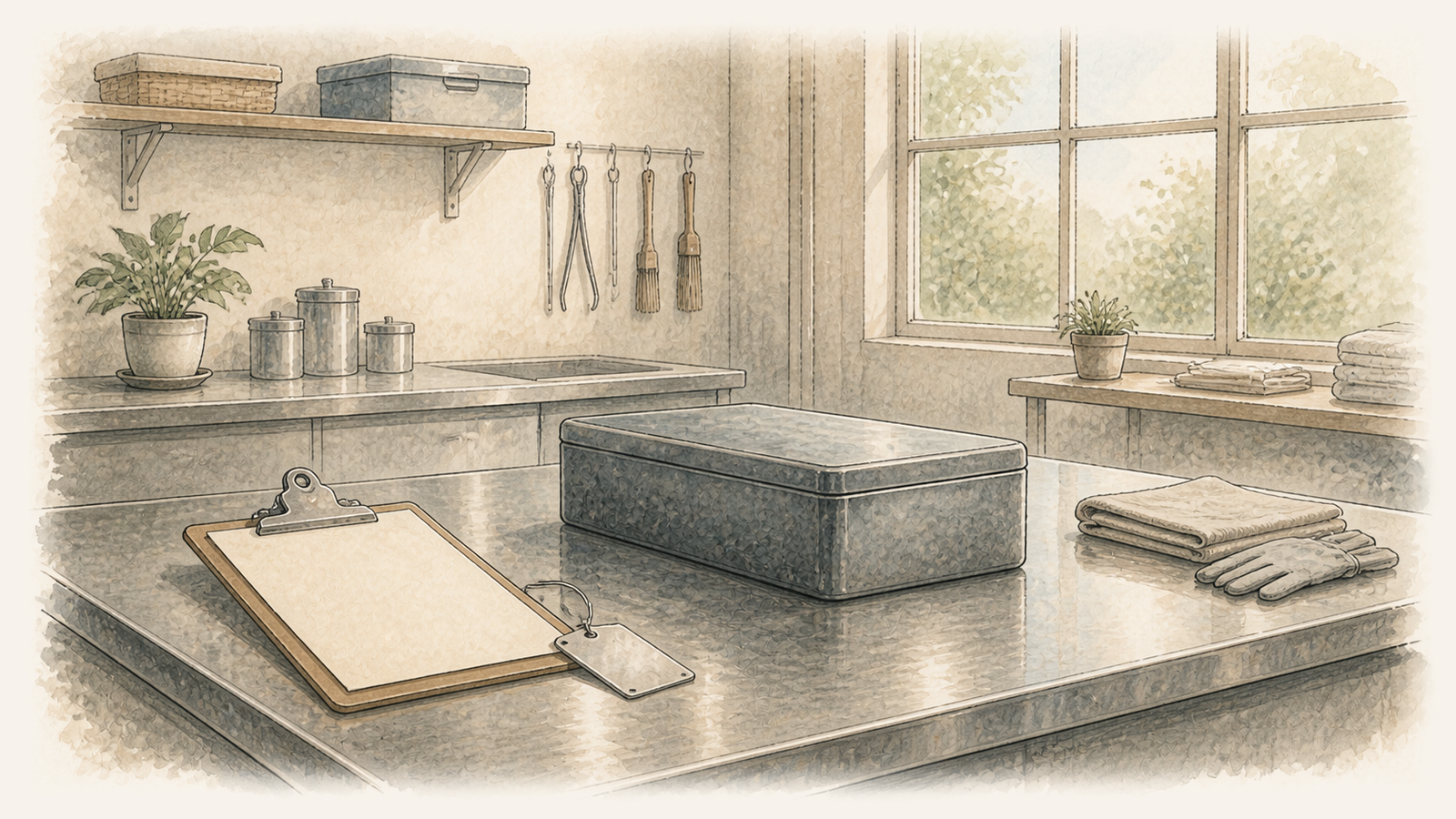
Nothing happens until an authorizing agent signs. That is the person legally entitled to control the disposition of the remains, usually a spouse, then adult children, then parents, in the order your state sets. That person signs a written cremation authorization, and a permit has to be issued before the crematory can proceed. Because cremation is irreversible, the coroner or medical examiner also has to sign off in most cases, which is the step that most often adds days.
The timing differs across the three states. In Illinois, the death certificate must be filed with the local registrar within seven days, and it has to be filed before the body can be cremated or removed from the state. Missouri gives five days from the date of death; Kansas gives three. If a county coroner or medical examiner is investigating, none of those clocks matter until they release the body.
How does a crematory make sure you get the right remains back?
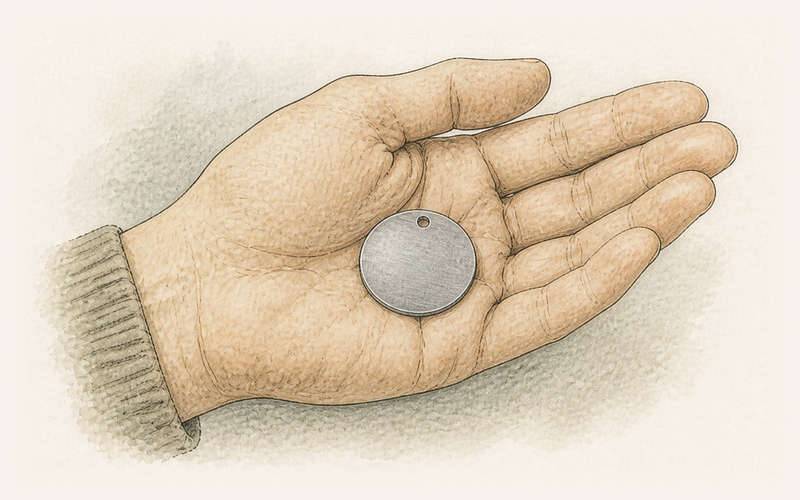
Identity is verified and logged at every single transfer: at the removal from the place of death, during transport, in refrigerated storage, at placement into the cremation chamber, at removal from it, during processing, and at return to the family. Industry procedures call for a numbered stainless steel identification disc that travels with the body through the entire process, including through the chamber itself, and is placed in the container with the processed remains. Each of those steps is recorded on a cremation log with a date, a time, and an operator.
Cremation chambers are built to hold one body at a time, and commingling remains from separate cremations is prohibited wherever crematories are licensed. You are allowed to ask how a specific crematory handles this. Many will show you the log, hand you the identification disc along with the remains, or let a family member witness the placement into the chamber, and some charge a modest fee for a witnessed cremation, which has to appear on the price list.
What container is the body in?
The container has to be completely enclosed, rigid, leak resistant, and combustible. That means a cardboard or pressed-wood alternative container, or a wooden casket, since metal caskets can't go into a cremation chamber. Under the FTC Funeral Rule, no state or local law requires a casket for cremation, and any funeral home that offers cremation must tell you alternative containers are available and must actually make them available. If you're told you have to buy a casket in order to be cremated, that's a violation, not a rule.
What actually happens inside the cremation chamber?
The chamber, sometimes called a retort, is lined with refractory brick and heated by gas burners into the 1,400 to 1,600 degree range. The body isn't sitting in an open fire the way people picture it; the combination of heat and evaporation does the work, and the gases are drawn through a secondary chamber before venting. Duration depends on body size and equipment, running from well under an hour in the case of an infant to more than two hours for a large adult.
After the chamber cools, the operator sweeps the contents out and passes them through a magnet and a hand sort. Casket hardware, surgical pins, plates, and joint replacements don't burn; they are separated out and, at most crematories, recycled rather than returned. Pacemakers, defibrillators, and other battery-powered implants have to be removed before cremation because they can explode inside the chamber, which is why the funeral home asks about them, and why the answer matters more than it seems.
Why are cremated remains not really ashes?
What's left after the chamber is bone, mostly calcium phosphate with trace minerals. Those fragments go into a processor, a machine that reduces them to pieces smaller than one-eighth of an inch, which is what produces the fine, sandy texture families recognize. The result is generally white to gray in color, and the average weight of adult cremated remains is four to six pounds. As a rule of thumb the industry allows one cubic inch of urn capacity per pound of body weight before death, which is why the standard adult urn holds around 200 cubic inches.
What to ask before you sign the authorization
Ask whether the funeral home owns its own crematory or sends bodies out, and if it sends out, to whom and how far. Ask what the identification procedure is, whether you can witness, and how many days until the remains are returned. Then ask for the General Price List, since the FTC Funeral Rule entitles you to keep a copy and direct cremation has to be listed at its own itemized price, separate from any package. A crematory that answers all of that plainly is usually one that runs a careful floor.
Sources and references
These references support the guidance in this article. Each entry names the source and the date we checked it. Open the links for more detail, and confirm current requirements, availability, or costs with the relevant organization before relying on them.
- FTC — The Funeral Rule (consumer guidance) · checked
Funeral directors must give you price information on the telephone if you ask for it. You don't have to give them your name, address, or telephone number first.