Sorting someone’s belongings after a death can begin with one small area and a place for things you are not ready to decide about. Before donating, selling or distributing anything, clarify who has authority over the property. If there is an estate representative, coordinate with that person first. Emotional readiness and permission to dispose of property are separate questions.
You may be facing a room full of familiar objects while relatives are asking what they can take. Or you may be the person helping from another state, with only a weekend available. A limited visit does not require a permanent decision about every object. Start by agreeing what this particular session is meant to accomplish.
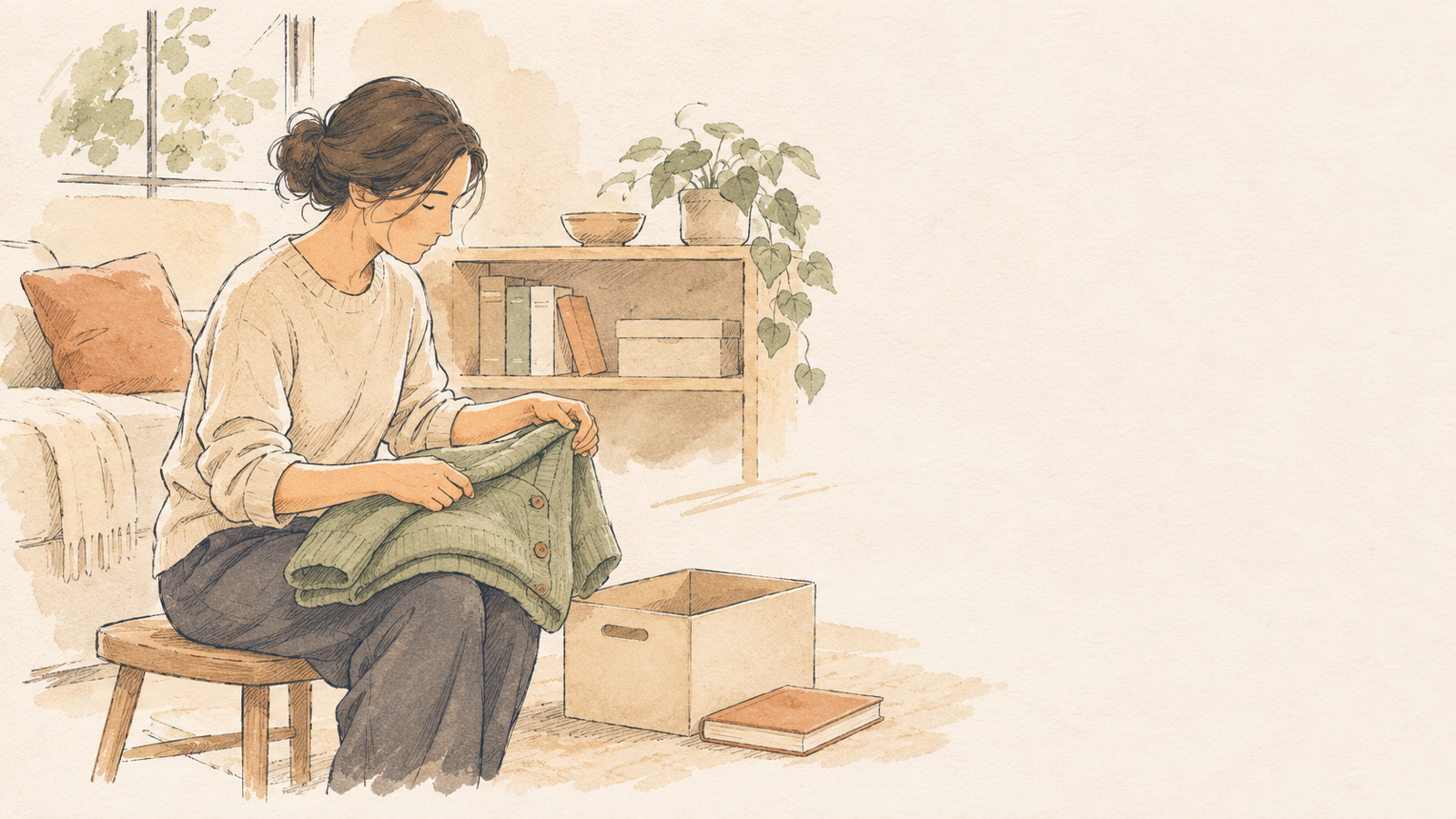
What should happen before anything leaves the home?
The American Bar Association’s overview of estate administration describes protecting and inventorying estate assets as part of the authorized personal representative’s work, and notes that estate rules depend on state law. Ask the representative or estate attorney what may be sorted, moved or released. If ownership is disputed or authority is unclear, pause disposal and get guidance.
For a practical starting conversation, ask: “Are we recording what is here, preparing items for storage, or choosing things that are already cleared to leave?” Write down the answer. Keep family requests separate from final decisions. An item can be important to someone without being theirs to take that afternoon.
How much should you try to do at once?
Choose a manageable boundary: one drawer, a small shelf or a single box. Set an ending point before you start. If you would rather have company, ask someone to sit with you, carry boxes or record questions. They do not have to make the decisions for you.
The National Institute on Aging’s guidance on grief and loss suggests waiting until you feel ready to go through personal items and allowing a “not sure” group alongside items to keep or give away. Treat those groups as provisional wishes until any estate and ownership questions are resolved. A box marked undecided can be a useful outcome for the day.
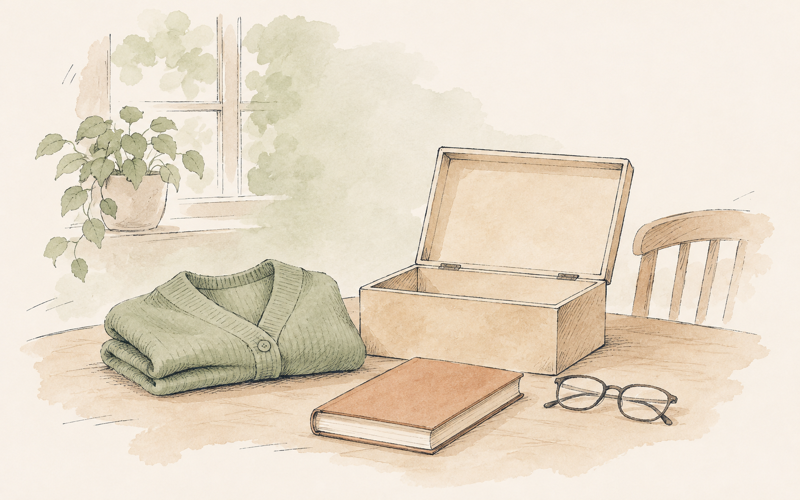
What should you set aside for a closer look?
Consider making a separate place for documents and unanswered questions. If you encounter a will, account paperwork, keys or an unfamiliar item that may be valuable, stop and flag it for the person handling the estate. Ask what should be retained rather than deciding its importance from its appearance. Keep private papers out of donation boxes.
You might photograph an object and note where it was found, if the authorized person agrees. A brief description can help a relative recognize which item you mean. Use a private shared folder only with the people who need access; you can discuss the meaning of a photograph without putting identity documents or account numbers in the same message.
How do you handle items more than one person wants?
Invite people to explain what the item means to them before choosing a solution. Record requests without promising an outcome. If a family discussion becomes tense, put that object aside and return to a simpler task. Bring questions about entitlement or distribution to the estate representative or attorney rather than trying to settle them through a quick vote.
If you are helping, ask before assuming that a worn coat or ordinary kitchen bowl can go. You can offer practical support without judging why an object matters. If you are the one deciding within your authority, it is also reasonable to say, “I can consider that later; today I am only sorting this shelf.”
What if the home needs to be cleared soon?
Separate the immediate space problem from the final ownership decision. Ask the authorized person whether temporary storage or a smaller holding area is possible, who would arrange it and what it would cost. If hiring help, explain which items may be moved and which must stay. Get the scope and charges in writing before work begins.
At the end of the session, leave a short note describing what was moved, where it is now and which questions remain. Choose the next small area only if you want to. The useful result may be a clear path through the room, a safely stored folder and one box of decisions that can wait.
Questions families ask
- How soon after a death should I sort personal belongings?
Consider your readiness and any practical deadlines, then agree on a small task. Before anything is sold, donated or distributed, clarify authority and ownership with the estate representative or attorney.
- What if I cannot decide whether to keep something?
Set it aside as undecided if space and the estate arrangements allow. You can note why it matters or ask a relative about it later. Sorting an item into a provisional group does not have to become a final decision that day.
- Can I donate everything once the family agrees?
Check with the person legally authorized to handle the property before arranging a donation. Family agreement alone may not answer ownership or estate questions. Ask what is cleared to leave, and keep a record of the instructions and any items transferred.
Sources and references
These references support the guidance in this article. Each entry names the source and the date we checked it. Open the links for more detail, and confirm current requirements, availability, or costs with the relevant organization before relying on them.
- American Bar Association — Managing an estate · checked
locate, protect, and appraise estate assets;
- National Institute on Aging — Coping with grief and loss · checked
When you feel ready, go through your loved one’s clothes and other personal items.