To write an obituary, gather the facts you want to share, add a few details about the person, and check the arrangements before publishing. You can keep it brief. You can also ask someone else to help write it or handle the submission.
Start with whichever part comes most easily: the names and dates, a memory, or the service information. You can put the paragraphs in order afterward.
What facts can you include in an obituary?
A starting list is the person's name, the name friends knew them by, their age, the date of death, and the town or community where they lived. Decide together which personal details you want to make public. If you are unsure about a publisher's requirements, ask before submitting.
You can name family members and other important people in their life. Ask someone familiar with those relationships to check the names and spellings. There is no need to force a complicated family into wording that does not fit.
For a public service, include the confirmed date, time, location, and any instructions guests need. If arrangements are private or have not been settled, say that plainly. Check the name and destination of any charity you ask readers to donate to.
How can you make it sound like the person?
Choose a detail you remember, and describe it in ordinary words. Instead of stopping at “She loved cooking,” you might write: “She kept a notebook of recipes, with a star beside every dish her grandchildren asked for again.” That is an illustration, not a formula; your detail may be about work, friendship, music, or something else entirely.
You could ask a friend or relative: “What would you like people to remember about him?” Use the answer only if it is accurate and appropriate to share. A small familiar detail can sit alongside the facts without turning the notice into a long biography.
What tone should you use?
Use words the family is comfortable with. A straightforward sentence such as “Jordan Lee died on August 12” may suit you. Religious wording or a familiar family phrase may suit someone else. You do not have to add a belief or sentiment you do not share.
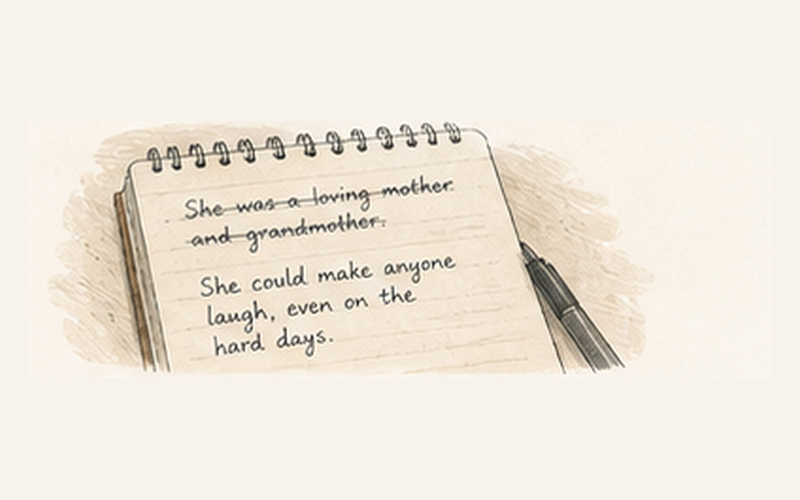
If a sentence feels too formal, try saying it aloud as though you were telling a friend. Keep the phrases that sound right to you. The draft does not need to produce a particular emotional response to be worth publishing.
How can you check the draft?
Read once for meaning: does this say what you want it to say? Then make a separate pass for names, dates, service times, addresses, and contact details. Check those against the confirmed arrangements.
If possible, ask a second person to check the facts as well. Mark anything uncertain and resolve it before submission. Save a copy of the final version so you can refer to what was sent.
What should you ask before publishing?
Ask the funeral home, newspaper, or other publisher about the price, length limit, photo requirements, and submission deadline. Ask whether you can review a proof and how corrections or later changes are handled. Do this before settling on a long version or paying for placement.
Check what will be public and where it will appear. Before including someone else's contact information or a photo, ask their permission. Confirm that any online service offers the features you need and that you understand its terms and costs.
What can you do next?
Make a short list of the facts you know and put a question mark beside anything that needs checking. Then write one sentence about the person. You can build the rest around those notes, with help if you want it.
Questions families ask
- Can an obituary be short?
You can write a brief obituary with the person's name, the details you want to share, and any confirmed public arrangements. Ask the publisher about its requirements. You can keep a longer account for family and friends if you wish.
- What if the service details are not ready?
You can say that arrangements have not yet been confirmed, then tell readers where to look for an update if you have an agreed place to share it. Check with the publisher about how updates work before submitting the notice.
- Can someone help me write an obituary?
You can ask a relative, friend, or funeral home to help with the draft or submission. Tell them which facts and memories you want included, which details should stay private, and who needs to check the final version.