Flying with cremated remains is possible, but check the container, your airline’s rules and the paperwork for your route before you travel. Airport security and airline acceptance are separate checks. Start with the airline operating each flight, then ask the crematory about a suitable travel container. You do not need to choose a permanent urn before making those calls.
This guide is for families across the United States. It covers carrying cremated remains on a passenger flight, rather than arranging transport of a body or booking a cargo shipment. The airline examples and official guidance below were checked in October 2026; confirm them again for your itinerary.
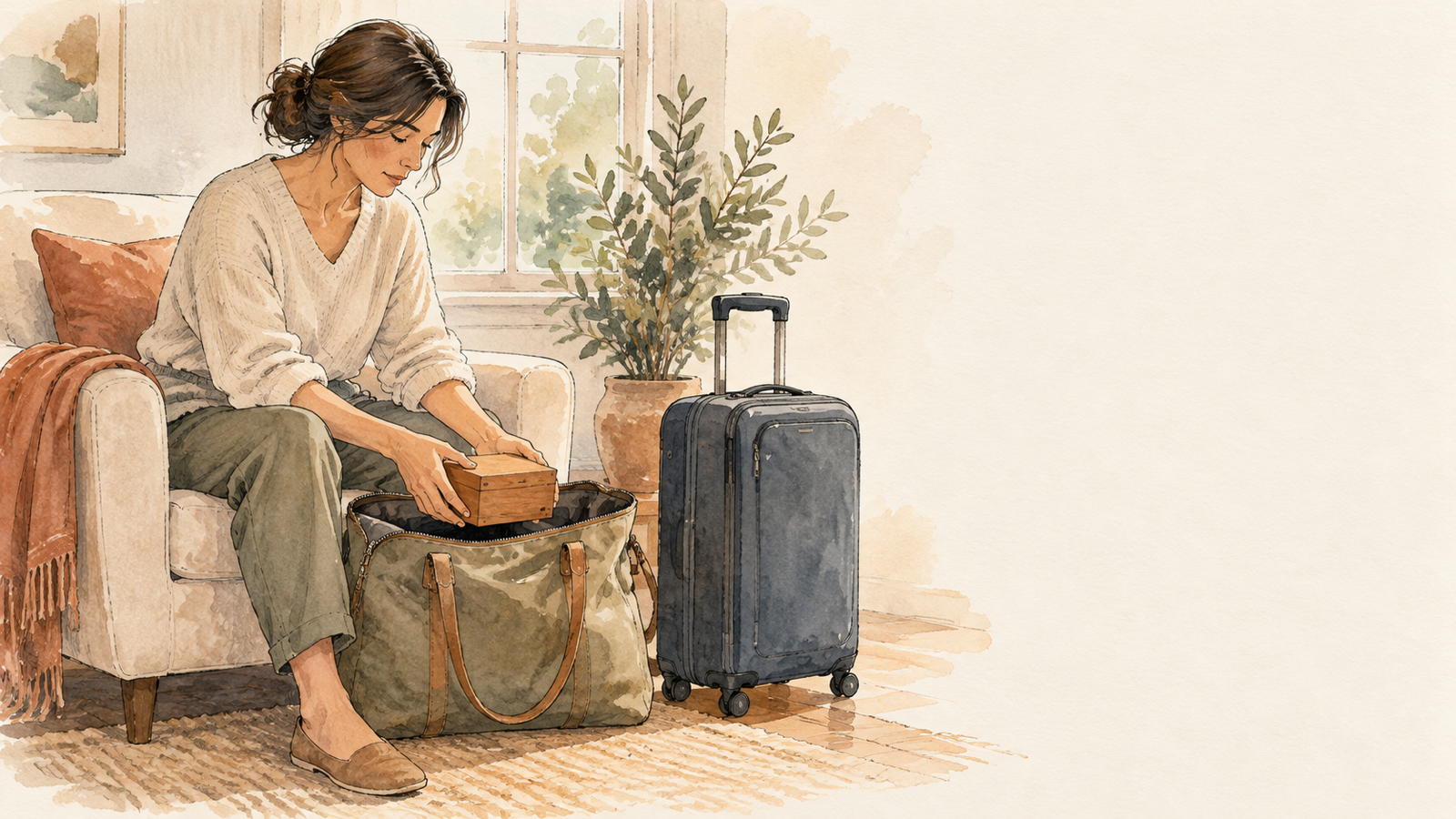
What container works for flying with cremated remains?
Choose a container that can be screened, rather than assuming that any sealed urn can travel. U.S. Customs and Border Protection’s guidance says cremated remains on a domestic or connecting U.S. flight must be in a container that can pass through TSA X-ray screening. It points to lightweight materials such as wood or plastic.
Ask the crematory: “We will be flying with these remains. Can you provide a secure travel container that can be X-rayed, and explain how to pack it?” If you already have an urn, describe its material and construction. Ask about transferring the remains into a suitable container before travel; do not leave that question for the security line.
Can the ashes go in a carry-on bag?
Check the operating airline’s current policy before deciding between carry-on and checked baggage. For example, Delta’s cremated-remains policy permits either, subject to screening, and requires a death or cremation certificate. Delta says an opaque metal container cannot pass the checkpoint and that TSA cannot open it to inspect inside.
Use that policy as an example, not as permission for every airline. Ask where the container counts within your baggage allowance, how it should be packed, and what happens if the aircraft has limited cabin storage. For connecting flights, write down the answers for each operating carrier, including any partner airline shown on the booking.

Which documents should you bring?
Ask your airline to name the documents it requires, including whether copies are acceptable. Keep the answer with your booking details and place the requested paperwork somewhere accessible. Do not assume that an airline employee can identify the contents from the appearance of the container, or that a certificate replaces security screening.
Airline requirements differ. British Airways’ published guidance, for example, asks for a death certificate and cremation certificate or country-specific equivalents. It also requires a tightly sealed, sturdy outer box or case. That is a carrier-specific example, not a U.S.-wide document rule.
What if the flight crosses an international border?
For an international trip, check the airline and the relevant destination and transit authorities before booking. Ask specifically about cremated human remains, since instructions for transporting a body address a different situation. Request guidance for your exact route rather than relying on what worked for another family on a domestic flight.
Keep permission to travel separate from permission to scatter or place the remains at the destination. Before planning a ceremony, ask the receiving cemetery, land manager or relevant local authority what applies there. A completed flight does not answer that separate question.
What can you do before leaving home?
Put the container, requested documents and airline instructions together, then review the plan with anyone traveling with you. Ask the crematory who you can contact if a question arises. Give yourself room in the schedule to seek help rather than arranging the ceremony immediately after an uncertain connection.
One useful first step is a short call: “I will be carrying cremated remains on this itinerary. What container, paperwork and baggage arrangements do you require?” Save the reply. The aim is a clear travel plan, not another difficult decision about a permanent memorial.
Questions families ask
- Can TSA open an urn if it cannot be screened?
Do not plan on opening the urn at the checkpoint as a solution. Delta’s published guidance states that TSA cannot open the container and that a metal container that blocks the X-ray view will not be allowed through. Ask about a suitable travel container beforehand.
- Does every airline require the same certificates?
No single airline example should be treated as a universal document checklist. Delta specifies a death or cremation certificate, while British Airways asks for both or country-specific equivalents. Confirm the current requirements of each operating airline on your route.
- Do I need to buy a permanent urn before flying?
Start by asking the crematory about a suitable temporary travel container. Check its screening suitability and the airline’s packing requirements before choosing it. You can keep the question of a permanent urn separate from the immediate travel arrangements.
Sources and references
These references support the guidance in this article. Each entry names the source and the date we checked it. Open the links for more detail, and confirm current requirements, availability, or costs with the relevant organization before relying on them.
- U.S. Customs and Border Protection — Bodies and ashes entering the United States · checked
This should be a container constructed of wood, plastic, cardboard or any non-lead based ceramic.
- Delta — Cremated remains baggage policy · checked
A death or cremation certificate is required.
- British Airways — Carrying cremated remains · checked
We ask you to place the remains in a tightly-sealed and sturdy outer box or case.